Friday, June 19, 2015

Taking Responsibility for Tragedy and Identifying the Real Problem: A Response to the Charleston Shooting

It happened, again. Senseless violence in America ending the lives of nine people. This time, it happens to be racism. In other instances we chalk it up to mental illness or some other notion of intolerance we've set up, and we begin to stand on our soap box and declare why we should take steps A-Z to fix the problem. 'Gun control', 'changing media bias', 'changing the conversation about race' or 'changing the conversation about mental disease'... it happens every time, the people who are leaders in the various spheres of influence in this country come up with their program that's going to solve the problem, and the huddled masses follow after them like sheep, blindly repeating the rhetoric.

I want to share two words, one which addresses a very serious criticism of the American church in light of this specific tragedy, and then one that builds on that to flesh out what the root of the problem actually is. So first, let's look in the mirror. The church that this murderer stepped into is 'historically Black'. Why? Well, a big part of the reason why that is the case is because white, conservative, Christians were racist for a very long time. I'm a white, conservative, Christian so that really resonates at my core. On the other hand, as racial wounds have begun to at least somewhat heal in this country and Christian groups (such as my own Southern Baptist Convention) started to own and take responsibility for their dark, racist pasts, there is very little effort on the part of most churches, especially where I am from in the South, to integrate racially.

This is ridiculous. We're supposed to be part of the same body, right? When this murderer (and no, I don't plan on using his name because I don't think he deserves to have it mentioned) walked into a Bible study to kill people of a very specific skin color, why on earth were there not White and Hispanic and Native American brothers and sisters in the Lord there to either stop him, or at least share in the sufferings as one body. This man was able to select his target so easily precisely because even after all this time White folks and Black folks can't seem to get over their own comfort zones and racial biases enough to worship their common Savior together. That is a tragedy in itself on top of the terrible grief we already experience as a country because this sort of thing still happens.

But why does it happen? This division within the body happens for the same reason why the secular society around us can't get the solution right. It all stems from having too weak a sense of human sin and and the role of the Gospel in every possible human good. First of all, man does evil things because man is evil. Without the work of the Holy Spirit in our lives, the 'righteousness' of man is filthy rags. This means that whatever strategy man comes up with to solve these problems, if there' no Holy Spirit, it's not a righteous strategy, it's insufficient, it's God-less, literally. The fact that our strategies to overcome issues like the murders in Charleston are pretty obvious. However, what is less obvious, but still as vital, is that the segregation in our churches just as driven by the fact that we don't put the Holy Spirit in the middle of how we build our churches and how we address the race problems in our church.

If our solutions God-less, what hope do we really have for it working? We don't. So what do we do instead? Well, quite simply, the answer is we share the Gospel. It may sound simple, but if our problem is that our solutions are not righteous without God, then the key has to be getting God into the lives of the people, and sharing the Gospel, and making the Gospel truly central to our churches. If you're listening to your preferred pundit and they are rooting the problem in 'media bias' or 'racism' then they're deceived, and they are missing the true issue. We should address racism, we should address fair-minded media coverage, but we don't truly fix these things without the work of the Holy Spirit and the Gospel message. Any solution without that, is a lie. We as Christians shouldn't promote it, and we as Christians should be critical of those among us who try to do so.

When the Holy Spirit renews us, and makes us new creatures, only then do we have any hope of making real changes to our society. Promote the Gospel, not the lies of our society that try to fix things through secular activism and legislation without the necessary foundation of the work of the Holy Spirit. 

Saturday, June 13, 2015

10 Books, Besides the Bible, that Every Christian Should Read

Initial Apologies:

If someone were to attempt to list all the books that could be beneficial to the life of every single Christian, the list would take days to read, because God, in his wonderful grace, has used many people to communicate the truth about him very beautifully. These ten texts are simply a start, I encourage everyone to be consistently involved in reading wise and godly Christians from the history of the church. So, I am sorry for the essential incomplete nature of this list, but hopefully it will be a strong start for those looking to bolster their reading of texts that seek to teach about our Holy, Triune God. All links below lead to places where the texts can be acquired. The numbers are not a ranking of how I rate the quality of each in relation to the others. 


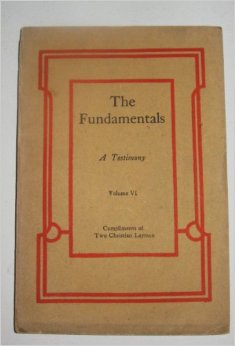
1. THE FUNDAMENTALS: A TESTIMONY TO THE TRUTH


If you ever wonder where the term 'Fundamentalist' comes from, this text is it. BEFORE you immediately disregard it based on your negative perception of the term 'Fundamentalist', bear with me, please. Originally released as a series of essays from the Bible Institute of Los Angelos, (my personal copy is a two volume set) this text seeks to lay out the core essentials of what the Christian faith is in a collection of essays by a variety of scholars from various denominational backgrounds. Notable authors included B.B. Warfield, Thomas Spurgeon, R.A. Torrey, A.C. Dixon, C.I Scofield, and Charles R. Erdman. It addresses numerous topics from atheism to the Trinity, to the nature of Scripture and the Atonement. You can find it on Kindle for $0.99 or on ntslibrary.com for free. 

2. THE PILGRIM'S PROGRESS


This text is possibly the greatest Christian allegory ever written. It is the masterpiece of English Baptist John Bunyan, and it powerfully resonates with those on the Christian walk. Filled with great theological content woven into the fabric of an original story, it is a book that can be of great benefit to children and adults alike. It can be bought rather inexpensively on Amazon or found online for free at ccel.org.

3. FOXE'S BOOK OF MARTYRS


It is vital that Christians understand what their predecessors have suffered for the sake of the Gospel. To lose sight of the all-consuming passion in which those before us have striven to preserve the truth in the face of cultural oppression is to risk allowing ourselves to be lulled to sleep by the rejections of the Gospel in our own culture and era. Time and again, people promoting themselves as 'Christians' have simultaneously promoted the sins and heresies of the world. Such action is not only disrespectful to God, but also to those who died so that we could have the Gospel, today. This book, by John Foxe, is but one of many great texts that draw attention to the struggles of Christians past, and it can be found for as cheaply as $1.00 on Kindle or for free on ccel.  

4. THE NEW TESTAMENT DOCUMENTS: ARE THEY RELIABLE?


F.F. Bruce demonstrates in this concise but brilliant piece of scholarship, that the texts of the New Testament are reliable despite what liberal and atheist scholars have tried to say to the contrary. Being aware of Bruce's argument in this text is a great tool for every Christian to have. This book is $2.00 on Kindle and can be purchased rather cheaply in other formats as well. 

5. THE UNEASY CONSCIENCE OF MODERN FUNDAMENTALISM


Carl F.H. Henry agreed with the theology laid out in The Fundamentals, but he realized that the movement had lost its ability to engage the culture with that truth. In less than ninety pages, he kick-started conservative evangelicalism. This book can be found on Amazon. 

6. ORATIONS AGAINST THE ARIANS


For over half a century Athanasius defended the doctrine of the Trinity against Arianism. This text is the summary of his defense of true Christianity against that heresy. The paperback can be found on Amazon or it can be found on ccel.org for free. 

7. DESIRING GOD


What does it mean to be a Christian hedonist? Essentially, as John Piper argues in his most influential book, it is to fulfill the chief end of man which is to 'glorify God and enjoy him forever'. How does a Christian do this? He tells us that 'God is most glorified in us when we are most satisfied in Him.' A book centered wholly on the glory of God, this text challenges everything about the modern inclinations of natural man and exhorts him to look heavenward for his satisfaction. This book, and a study guide to go with it, can be found for free at desiringgod.org or can be bought at Amazon.

8. SINNERS IN THE HANDS OF AN ANGRY GOD


Easily the shortest inclusion on our list, but nevertheless essential. This sermon by Jonathan Edwards should remind us why the Grace of God is so necessary in our own lives, and why the Gospel is so needed by the world around us. Beyond that, it is considered a classic piece of American literary history. It is free, here, it is read online, here. It can be bought, here.

9. A Christian Manifesto


There are many precise presentations of the Christian faith, and what it means to live it, out there, but Francis Schaeffer provides us with one of the very best in his Manifesto. It is just as relevant now as it was when he first wrote it, and it will continue to be so by virtue of the truth it conveys. This book can be found on Amazon. 

10. THE EARLY CHURCH


Every Christian should know the history of the early church, and Henry Chadwick delivers it to us in a masterful way in this text. This text can be found on Amazon.

Final Thoughts:

As I said, it is impossible to make an exhaustive list of this sort, but I have tried to provide a varied list that addresses the various needs of the Christian life, and I tried to include texts that would helpful both to Christians of a more academic persuasion and also those who simply wish to be faithful laymen in the service of God. How did I do? What would you include that I did not? Which books were you disappointed to see on my list?

Saturday, June 6, 2015

Reformed Baptists and Theonomy


There is a lot of discussion in Reformed circles about Theonomy. I am personally against this teaching, and have my own arguments/reasons why. However, since we've interacted a great deal with the 1689 London Baptist Confession, I thought it would be appropriate to share some resources from Reformed Baptist sources on the topic of Theonomy.

What sort of Theonomy are we talking about?
There are two main types of Theonomy. 'Covenanter' and 'Reconstructionist'. Covenanter Theonomy is not really a Reformed Baptist concern. This form is based on the broader Westminster Standards which existed in Scotland in the 1600s. They have additional documents to the WCF and the Westminster Catechisms that Reformed Baptists have never adopted. Meeting a Covenanter 1689 adherent would be a strange sight, indeed. 

As for the Reconstructionists, one of their leading adherents is actually one of my favorite philosophers. Greg Bahnsen (September 17, 1948 – December 11, 1995), a powerful Christian apologist, was extremely adamant about the view. He wrote several books on the subject, the most notable of which is probably By This Standard: the Authority of God's Law Today. I share the link because, while I disagree with Theonomy, I do not want anyone to think I don't have tremendous respect fro some of the men who hold it, and their arguments deserve to be read, first hand, by someone who is coming to conclusions about Theonomy. 

A further synopsis is given by non-Theonomist RC Sproul, here: http://www.ligonier.org/blog/what-reconstructionism-what-theonomy/?mobile=on

Reformed Baptist reactions:

Sam Waldron, who wrote the exposition of the 1689 that we have dealt with, wrote a very thorough article on the subject of Theonomy, you can find that here:  http://www.reformedreader.org/rbs/tarba.htm


For an older source, I would suggest 1700s Baptist apologist Abraham Booth, and his essay entitled "An Essay on the Kingdom of Christ." You can get a $.99 ebook version of the text on Kindle, and you can read a review of it, here: http://www.1689federalism.com/the-kingdom-of-christ-abraham-booth/


Many of those familiar with Reformed Baptist thought will know about a view of Covenant Theology known as 1689 Federalism. The primary website that supports this view is www.1689federalism.com. On that site, they have the following article:  http://www.1689federalism.com/1689-federalism-theonomy/

The Confession:
Here is the relevant chapter from the 1689 Confession of Faith:

Chapter 24: Of the Civil Magistrate
1._____ God, the supreme Lord and King of all the world, hath ordained civil magistrates to be under him, over the people, for his own glory and the public good; and to this end hath armed them with the power of the sword, for defense and encouragement of them that do good, and for the punishment of evil doers.
( Romans 13:1-4 )
2._____ It is lawful for Christians to accept and execute the office of a magistrate when called there unto; in the management whereof, as they ought especially to maintain justice and peace, according to the wholesome laws of each kingdom and commonwealth, so for that end they may lawfully now, under the New Testament wage war upon just and necessary occasions.
( 2 Samuel 23:3; 
Psalms 82:3, 4; Luke 3:14 )
3._____ Civil magistrates being set up by God for the ends aforesaid; subjection, in all lawful things commanded by them, ought to be yielded by us in the Lord, not only for wrath, but for conscience sake; and we ought to make supplications and prayers for kings and all that are in authority, that under them we may live a quiet and peaceable life, in all godliness and honesty.
( 
Romans 13:5-7; 1 Peter 2:17; 1 Timothy 2:1, 2 )

One might notice a couple of interesting points, here. First, 24.2 seems to assume that each kingdom and commonwealth is going to have its own unique set of laws, and it refers to them as 'wholesome', not 'Biblical' or 'Divine'. Further, Taking points 2 and 3 together suggests a relationship to the government where we participate when we are asked to do so, but otherwise we live in quiet and peaceable submission. This last note of 'quiet and peaceable life' is not found in the Westminster Confession, and indeed, the Baptist confession differs from its older cousin quite a bit in this chapter. Even starker contrast is seen between the 1689 and its congregationally political cousin, the Savoy Declaration. (The latter is, in this author's opinion, is the confession with the strongest theonomic implications.)

Other Reformed voices against Theonomy who are not necessarily Baptists:


Resources for Hermeneutics

This past Thursday I was blessed with the opportunity to appear on "Theology Matters with the Pellews" to discuss the topic of Hermeneutics and, specifically, the relationship of Philosophy to Hermeneutics. The link to the interview can be found, here:  http://www.blogtalkradio.com/truradio/2015/06/04/theology-matters-with-the-pellews-hermeneutics-and-bible-study-methods

Here are the resources referenced on the show and some additional references on the topic:

Definition of Hermeneutics (Carm.org)

Books:

Kevin Vanhoozer: Is There a Meaning in this Text? Review of this book: http://www.frame-poythress.org/review-of-kevin-vanhoozers-is-there-a-meaning-in-this-text/

Biblical Hermeneutics: Five Views

Walter Kaiser: Introduction to Biblical Hermeneutics: The Search for Meaning

Kevin Deyoung: Taking God at His Word

Vern Poythress: Inerrancy and the Gospels: A God-Centered Approach to the Challenges of Harmonization

Vern Poythress: Inerrancy and Worldview: Answering Modern Challenges to the Bible

Articles:


International Council on Biblical Inerrancy:


Other media:


Concluding remarks

Most of these resources are free, the books can all be found at Amazon.com. Thanks, again, to the Pellews for letting me be on their show! It was a tremendous blessing. 

Monday, April 20, 2015

Infant Baptism: Valid but irregular.


I've posted on Baptism, before. You can find that, here. I am a credo-baptist, however, unlike many Baptists, I do not think that someone who was baptized as an infant has a baptism that is necessarily invalid. I think we have an example that makes this consistent with the theology we already have in place. You can listen to a short exposition of that position, here, by John Piper.

A Cognate:

If you took the time to click on the Piper link, what you heard was a description of whether we should baptize those who are mentally challenged to the point that they cannot make a public profession. He argues that we should baptize these folks on the basis of a perception that we can gain from that individual. He then argues that we should probably not baptize these people if we gain no perception from the individual. 

I mostly agree with Piper, here. I think he has focused on God's grace and also defended the sanctity of Baptism in a very meaningful way. Therefore, I also agree with him that the Baptism of these non-professors would be valid.

Infant Baptism?

Okay, so, what about infant baptisms, are all infant baptisms valid? NO, they most certainly are not. Okay, I am sure that I've lost a bunch of folks at this point, but bear with me. I, as a Baptist, don't remember a single time in my life where I did not love God. That's not to say that there was no specific moment where I repented of my sins and professed myself to be a follower of Christ. There was definitely such a time, and it was on December 18th, 1995. I was six years old. But, thinking in terms of a Calvinistic soteriology, I do not believe that I lacked faith in God and his promises before that point, and I do think that God regenerated my soul before that point and brought me to that faith. 

If I had been baptized before my profession, given those details, I would readily accept them as valid. The presence of that regeneration, though prior to my profession, would be evident in a way that was similar to what we have seen in the discussion of the mentally disabled, above. If I am going to count the baptism of the mentally disabled as valid without a clearly articulated profession, it is only consistent that I grant the same to those infants who were baptized and who showed signs of God's regenerative work before articulating a confession. 

Now, in line with what Piper talked about with those who showed no signs of regeneration... if a person who was baptized as an infant do not reflect in their lives the work of regeneration, and live out a rebellion against God without ever having done so, and then they repent and come to faith. I would say that when that person was baptized there was no evidence of the work of redemption and therefore no evidence that God had worked regeneration in their souls. This person was an improper candidate for baptism as an infant.

Why not baptize everyone as infants?

As a Baptist, I believe that the form of baptism prescribed for believers is upon profession of faith. I respect a lot of my paedo-baptist brothers and I cherish them. However, I also believe that baptism by immersion is what is prescribed in Scriptures, and I would readily affirm that a baptism is not invalidated simply because it was not by immersion (Sam Waldron, who wrote an exposition of the LBCF 1689 that I have reviewed a few chapters of, agrees.) So, though a baptism not done by immersion would be irregular, it's still a valid baptism. I think in the case of these infant baptisms we have the same situation. 

Conclusion

A pastor or group of elders at a church is unlikely to know the circumstances of God's regenerative work in a person. Thus, I put the responsibility on the believer to determine their baptismal candidacy as it relates to their infant baptism. I believe this very short description matches a sense in which a person can both hold to credo-baptism and also affirm that infant baptism can be valid, but irregular.  

Monday, February 16, 2015

The Sabbath


I have two study Bibles that I use on a very regular basis. One is the Reformation Study Bible, produced by Ligonier Ministries, the other is the ESV Study Bible, produced by Crossway Bibles. I love both these study bibles and reference them repeatedly. As much as I love the resources in both these Bibles, there is one subject which they both get wrong: The Sabbath.

Romans 14


Romans 14 is a powerful declaration of Christian liberty. Verse 5 says the following:

"One person esteems one day as better than another, while another esteems all days alike. Each one should be fully convinced in his own mind."

One thing we know for sure, the words of the Scripture, here, are completely true, but what do they mean?

The two Study Bibles listed above give us two different interpretations:

Reformation Study Bible:

14:5 One person esteems one day as better than another. A pattern of holy days characterized the Jewish year, and it is probably to these that Paul refers, and not the Sabbath. If the Sabbath were in view it would have been more natural to say, “One man considers the Sabbath above the other days.”

ESV Study Bible
14:5 The weak thought some days were more important than others. Given the Jewish background here (see v. 14), the day that is supremely in view is certainly the Sabbath. The strong think every day is the same. Both views are permissible. Each person must follow his own conscience. What is remarkable is that the Sabbath is no longer a binding commitment for Paul but a matter of one's personal conviction. Unlike the other nine commandments in Ex. 20:1–17, the Sabbath commandment seems to have been part of the “ceremonial laws” of the Mosaic covenant, like the dietary laws and the laws about sacrifices, all of which are no longer binding on new covenant believers (see also Gal. 4:10; Col. 2:16–17). However, it is still wise to take regular times of rest from work, and regular times of worship are commanded for Christians (Heb. 10:24–25; cf. Acts 20:7).

The Reformation Study Bible gives us what is widely considered the 'classic Reformed' perspective, here. What is ironic about this, is that the fountainhead of the Reformed tradition, John Calvin, would be an Antinomian by the standard put forth by it. (This shall be covered more, later.) The ESV Study Bible gives us a perspective that has a distinct New Covenant Theology flavor, and essentially leaves us with only nine commandments, not ten, when we read the Mosaic law.

Both views are particularly flawed.

Reformation Study Bible


According to the Reformation Study Bible, if Paul were talking about the Sabbath, it would have been more natural to say that 'One man considers the Sabbath above other days." Unfortunately, their logic here makes no sense. If Paul were merely to list the Sabbath, he leaves open the possibility that his audience could still consider other feast days as set apart and above others. I would offer, to the contrary, that if Paul, an expert in Jewish law in his own right, felt it necessary to exclude the Sabbath from what he was discussing, he would certainly have pointed that out. The argumentation in Romans is wonderfully thorough from start to finish, and I see no reason for this oversight on Paul's part if he had intended for us to continue holding one Sabbath day in the mode that it was held in the OT.  If, on the other hand, he meant that NO days, including the Sabbath, were necessarily held above others, then he would have said "One person esteems one day above another, while another esteems all days alike." Which is precisely what he said. The brief argument given to us by the Reformation Study Bible is weak and unconvincing.

A possible salvation for this argument?

The Reformation Heritage Bible, which is of the same mind as the Reformation Study Bible, offers a slightly different angle to try to save this position:

A second example: honoring special days, probably the ceremonial holy days of the old covenant, once appointed by God but canceled in Christ (Gal4:10, Col2:16-17). While this could include some ceremonial elements of the mosaic Sabbath observance, the Sabbath itself is a creation ordinance and therefore has abiding moral force (Gen2:1-3; Ex20:11; Rev1:10). Paul's words here cannot mean that Christians are under no obligation to observe any sacred days, for then his words about food (verses14-23) would imply that Christians are under no obligation to observe a sacred use of food, as in the Lord's Supper.
This would be an incredibly powerful argument, if it were valid and sound. Unfortunately, it is not. What does Romans 14 say about food? We have that, here:

2 One person believes he may eat anything, while the weak person eats only vegetables. 3 Let not the one who eats despise the one who abstains, and let not the one who abstains pass judgment on the one who eats, for God has welcomed him. 4 Who are you to pass judgment on the servant of another? It is before his own master that he stands or falls. And he will be upheld, for the Lord is able to make him stand... 14 I know and am persuaded in the Lord Jesus that nothing is unclean in itself, but it is unclean for anyone who thinks it unclean. 15 For if your brother is grieved by what you eat, you are no longer walking in love. By what you eat, do not destroy the one for whom Christ died. 16 So do not let what you regard as good be spoken of as evil. 17 For the kingdom of God is not a matter of eating and drinking but of righteousness and peace and joy in the Holy Spirit. 18 Whoever thus serves Christ is acceptable to God and approved by men. 19 So then let us pursue what makes for peace and for mutual upbuilding. 20 Do not, for the sake of food, destroy the work of God. Everything is indeed clean, but it is wrong for anyone to make another stumble by what he eats. 21 It is good not to eat meat or drink wine or do anything that causes your brother to stumble. 22 The faith that you have, keep between yourself and God. Blessed is the one who has no reason to pass judgment on himself for what he approves. 23 But whoever has doubts is condemned if he eats, because the eating is not from faith. For whatever does not proceed from faith is sin.
 How the Reformation Heritage Study Bible draws their inference about what the rejection of a particular Sabbath day implies for the Lord Supper based on this food is beyond me. The only connection to the Lord's Supper this could possibly have is if a person were to argue that only a specific type of bread and fruit of the vine were acceptable for the Lord's Supper, and a person who rejects a particular day for the Sabbath would be very unlikely to require a specific type of flatbread or product of the vine for the Lord Supper anyway, so the Reformation Heritage Bible utterly fails in showing the contradiction that they would like to show.

The ESV Study Bible

The problem with the ESV Study Bible is that it completely nullifies one of the Ten Commandments, and then turns around and suggests that it is still 'wise' to take a Sabbath rest. By what authority does it assert the wisdom of a Sabbath rest if there is no longer a Sabbath requirement? It seems quite problematic to take the entire Sabbath command, which has its roots in the creation of the world well before the Mosaic law, and try to say that the entire concept is put away along with the ceremonial laws that were firmly established so many years later. 

A third alternative, as held by John Calvin and others...

What I would like to propose is a third option, which does not trip on the apparent Antinomian tendency of the ESV Study Bible position nor does it place us in the apparent bondage that is seen in the Reformation Study Bible position. I would suggest that in the command of the Sabbath rest there are two elements. One that is ceremonial and one that is moral. 

John Calvin wrote in his Geneva Catechism (1560) concerning the fourth commandment the following:

171. Do you mean that this commandment properly refers to the Jews, and was therefore merely temporary? I do, in as far as it is ceremonial.
172. What then? Is there any thing under it beyond ceremony? It was given for three reasons.
173. State them to me. To figure spiritual rest; for the preservation of ecclesiastical polity; and for the relief of slaves.
174. What do you mean by spiritual rest? When we keep holiday from our own works, that God may perform his own works in us. 
Calvin saw a certain part of the Sabbath day to be distinctly ceremonial in nature, and he happily asserted that this portion of this command was gone. However, he also asserted that the Sabbath command had three reasons in it which are still necessary for us, today: spiritual rest, the preservation of ecclesiastical polity, and the relief of slaves.

But doesn't preservation of ecclesiastical polity revert back to having one specific day? Certainly not, it simply means that congregations and even denominations, together, can agree on what day they will celebrate this rest as a body. In Calvin's view, this day could be any agreed upon by the church.

Calvin's full view of the Sabbath has many other elements to it, that deserve their own consideration, elsewhere, but I want to now suggest an outcropping of Calvin's view that he himself may not have fully stated, but which I think accounts for our issue at hand with the different understandings of Romans 14, and is at least consistent with Calvin's greater theory on the Sabbath.

1. If Calvin is correct, and there is a ceremonial aspect of the Sabbath that is completed, then it does not matter which day we celebrate as the Sabbath.

2. If Calvin is correct, and there is a moral requirement in the Sabbath that we are still bound to, then at some level Christians are responsible for respecting a Sabbath rest.

3. If Calvin is correct, and corporate worship is a key component of the Sabbath, then our choosing of a time to have our Sabbath rest should be done in concert with our brothers and sisters in Christ.

4. This implies that our Sabbath rest should be taken in a way that encourages fellowship between those who are in Christ.

"The one who observes the day, observes it in honor of the Lord."

If these three things are true, then some consideration should be made by those of us who do not care how we celebrate the Sabbath should be considerate of the convictions of those who feel it should be a specific day. The Sabbath is a key component of the fellowship we have in Christ, and, while the brief arguments considered do not seem to be successful in coercing all Christians to celebrate a particular Sabbath day, they certainly represent a perspective that is "fully convinced in [their] own mind" and that needs to be respected.

On the other hand, we, as those who do not feel compelled to honor a specific day, yet still recognize the morally required Sabbath rest deserve the respect from our brothers who respect the day to not be considered antinomian simply because we understand the nature of the current application of the fourth commandment in a different way.

Friday, December 26, 2014

Review: A Modern Exposition of the 1689 London Baptist Confession of Faith, Part 3: Of God and the Holy Trinity

To this point, I have interacted a great deal with Waldron's ideas on the confession. However, on this particular issue we have extensive online access to Waldron's thoughts on the matter. Much of Waldron's commentary in this chapter centers around hypostatic subordination of Christ in relation to tdeeplher. In a response to a book by Millard Erickson, Dr. Waldron gives us detailed commentary on this doctrine and how it plays out in our everyday lives. (It should be noted, that while I have a great deal appreciation for Dr. Erickson's Systematic Theology, his stand on the issues in question is a great disappointment to me.) As the following links will show, there is great implication for the relationship between husbands and wives in the relationships of the Trinity. Here is Waldron's work:


Waldron's work is strong and insightful, I highly suggest you give it a read. 

Rationalism and the Trinity

The links above will give you a very full impression of Waldron's commentary on subordination in the Trinity, so now we will focus on Waldron's ideas relating to how we are able to understand the Trinity, itself. First, let's take a look at the specific paragraph being discussed from the confession:

In this divine and infinite Being there are three subsistences, the Father, the Word or Son, and the Holy Spirit. All are one in substance, power, and eternity; each having the whole divine essence, yet this essence being undivided.The Father was not derived from any other being; He was neither brought into being by, nor did He issue from any other being.- The Son is eternally begotten of the Father.- The Holy Spirit proceeds from the Father and the Son.- All three are infinite, without beginning, and are therefore only one God, Who is not to be divided in nature and being, but distinguished by several peculiar relative properties, and also their personal relations.- This doctrine of the Trinity is the foundation of all our communion with God, and our comfortable dependence on Him.

Now, with this description in mind, this description that is one of the most extensive on the Trinity in any confession or creed in the history of the church, let's take a look at Waldron's reaction, the emphasis is mine:

The doctrine of the Trinity is and must forever be a divine mystery. It is a misconception of the creeds of the church (which are epitomized in this paragraph of the Confession) to think that they were intended to explain this mystery. Historically, the opposite was really the case. In the Monarchian (also known as the Sabellian or Modalist) heresy, the church was offered the option of explaining the mystery by saying that God was ultimately only one person in three successive modes of existence. In the Arian heresy the church was offered the option of explaining the mystery by saying that Jesus Christ and the Spirit were not God in the full sense of the word. Both options would have resolved the tension, but the church refused to say either. It maintained the mystery by maintaining that God was in one sense one and in another sense three. It asserted that ultimately God was both one and three: One essence or substance and three persons or subsistences. The creeds of the church fence the mystery. They do not explain it. The incomprehensibility of God means that the doctrines will involve holy ministries which transcend human reason and contradict fleshly wisdom (Note, for instance, chapter 3 'Of God's decree' and chapter 8 'Of Christ the Mediator'). Such mysteries must be accepted with humility and reverence by an intellect weaned from the arrogant and foolish notion of rationalism that it must or can comprehend the divine Being (Ps 131).

Now, as evidenced by the half a dozen links at the top of this post, it is not Waldron's contention that this small piece of the confession is all that the church can say in relation to the Trinity. What he is saying, however, is that the proper relationship of humanity to certain mysteries of God is one where we can frame the terms of the mystery (as the confession does) and consider implications of that mystery (as Waldron does in the articles above and in the rest of his chapter in our text). Neither of these constitute trying to grasp the full details of this mystery through rationalism. Instead, he insists that we should, out of humility, accept our inability to grasp this mystery and stop there.

This screams against every impulse of the modern philosophical and evangelical community. This idea that we should halt our inquiry is met in the contemporary mindset with derision and accusations of laziness or unwillingness to grow intellectually. This is a very serious charge and one that must be dealt with by those of Waldron's perspective with great care and respect. Waldron, in his exposition, is not giving us a course in epistemology, so we would certainly not expect him to make a fully defense of his assertions, but let us consider briefly a few considerations that are outside of Waldron's purview.

I discussed in my last post, which you may find here, that there are times when our confessions should be expanded or revised such that the substance of our beliefs can address new, modern questions in a way that is consistent with our heritage. On the surface, what Waldron is proposing here seems to be in direct contradiction to that idea. Many scholars would insist that the historic creeds and confessions need extensive revision on this topic, because they are not nearly complete in their explanation of this doctrine. They would happily apply Waldron's own argument against him and demand that he revise his statement.

How should Waldron respond? Well, it seems obvious that based on Waldron's argument that any expansion should be completely consistent with the heritage behind it. Waldron's contention, then, rests on the idea that all attempts to subject the doctrine of the Trinity to rationalism violate the doctrine put forth in the historical creeds and confessions.

Further, and more importantly, a confession is the declaration of what the Bible teaches about a doctrine, not what rationalism or philosophy says should be the case. Our proposed revisions in our last post were centered in trying to better explain what the Bible says about topics in a way that addresses modern forms of questions surrounding those topic. Waldron would argue (rightly) that the mystery that we see in the confession is the one that the Word of God itself leaves us with.

That makes the burden of updating the confession a Biblical enterprise and not a rationalistic philosophical one. That is not to say that reason has no place in theology; of course not! The entire discipline of systematic theology is an example of reason in the building of doctrinal expression, but this enterprise is deeply rooted in Scripture as its sole source of information.

One might respond to this by saying "yes, but already we have discussed the term 'verbal plenary inspiration', and even here you use the word 'Trinity' neither of which are in the Bible!" Yes, of course, we use these terms with the intention of having them represent what the Scripture teaches. These are terms of systematization of the message of Scripture, not concepts that we are developing outside of the testimony of the Word.

Conclusion

The header for this blog says that theology and philosophy are not at odds with one another, they simply need to be put in the right order. This topic of the Trinity is a perfect example of that.principle in action. Philosophical truths are used in the systematization of of what the Scripture teaches, but if ever Philosophy adds to the concepts taught in Scripture, it has overstepped its bounds. Reason is a God given gift, but we must use it as God intended, and it should never be used to add to the truth of God's Word.

This youtube video is a bit different in tone from our post, today, but it communicates the same truth, and for that reason I'm thrilled to share it with you: